Deck repair and restoration in Brantford, Ontario
A deck can look fine from the yard and still have hidden safety problems. In Brantford, freeze-thaw cycles, wet springs, and long sun exposure can speed up board rot, fastener failure, and surface wear. Repairing the right parts at the right time often costs far less than rebuilding the whole structure. There’s a lot to know and depending on the type of deck you have, you may want to get familiar with what you may need soon!
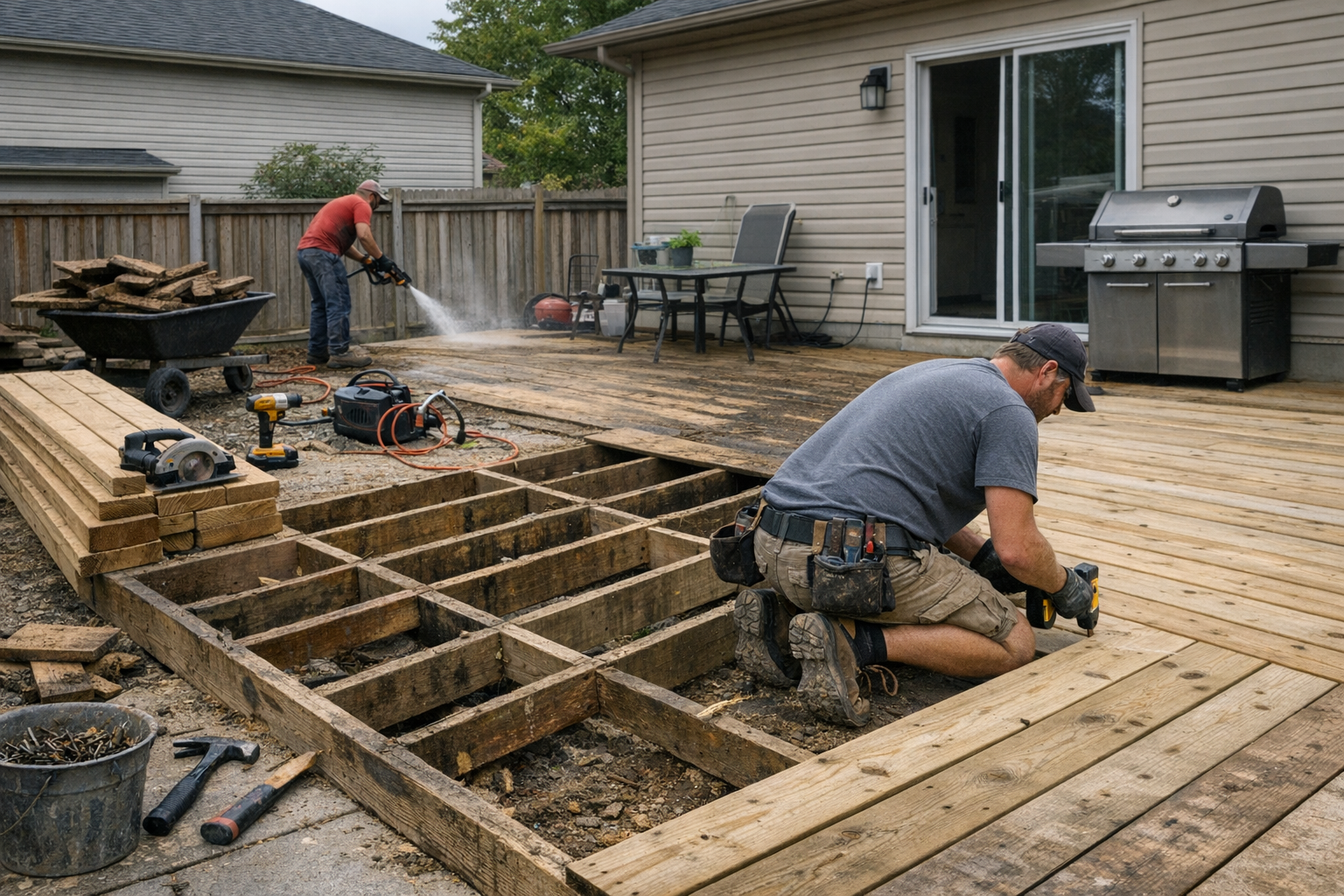
Replacing damaged boards, stairs, and loose railings
Surface damage is usually the first problem people notice. Split boards, soft spots near fasteners, shaky stairs, and loose railings all affect safety right away.
The key is to replace only what is failing, not just what looks worn. A few bad deck boards can often be swapped out, but stair treads and rail posts need careful checking because movement there usually points to weak connections underneath.
If these repairs are done poorly, the deck may still feel unstable after new material goes in. Matching board thickness, spacing, and fastening method matters, or the repaired area can hold water and fail again early.
Repairing framing issues and sagging sections
A sagging deck is not just a cosmetic issue. It can mean joists have weakened, beams have shifted, or footings have moved over time.
Structural repair starts below the surface. In Brantford, seasonal ground movement and moisture can affect posts and supports, so the framing needs inspection before anyone decides to reboard the top.
One common mistake is covering a low spot with new decking and ignoring the frame. That hides the symptom for a short time, but the deck keeps settling, and railings, stairs, and door thresholds can all go out of alignment.
Upgrading an old deck to improve safety and usability
Older decks often meet none of today’s practical expectations. Rail height, stair geometry, surface traction, and entry flow can all make a deck harder to use even if it is still standing.
An upgrade can include wider stairs, stronger guard systems, better lighting layout, or a more usable landing area. These changes improve daily use, but they also need to work with the existing frame, or the upgrade can overload parts of the structure.
Good planning here often overlaps with deck care maintenance because the best upgrade is one that also makes future inspections and surface upkeep easier. It also helps to understand how guard and stair requirements fit into the Ontario Building Code before changing railings, landings, or stair layouts.
Refacing an existing deck instead of full replacement
Refacing makes sense when the support structure is still sound. That usually means replacing the visible deck boards, trim, and sometimes rail components while keeping the main framing in place.
The tradeoff is simple. Refacing costs less and creates less disruption, but it only works if the joists, beams, connections, and footings can still carry the load properly.
A common failure here is assuming age alone decides the answer. Some older decks can be refaced successfully, while a newer deck with trapped moisture or poor flashing may need deeper repair before any new surface goes on. Problems around ledger attachment and water entry are a big reason why proper deck flashing details matter before new boards ever go down.
Restoring weathered wood with sanding, staining, and sealing
Weathered wood does not always need replacement. If the boards are still structurally sound, sanding, staining, and sealing can bring back a cleaner appearance and extend service life.
A practical upkeep plan usually works better than waiting for heavy deterioration, and a seasonal deck maintenance checklist helps catch wear before the surface needs major correction.
Timing matters. If wood is still damp, stain can fail early, peel, or dry unevenly. If sanding is too aggressive, the surface can become patchy and expose fastener heads or rounded board edges.
Choosing the right repair scope
The right approach depends on what is actually failing. Surface wear, structural movement, and outdated safety details each call for a different repair scope.
A careful site inspection will usually show whether the deck needs spot repairs, structural correction, refacing, or a full rebuild. If the scope starts moving beyond cosmetic work, the City of Brantford building and construction requirements are worth reviewing so the repair path matches current expectations. Getting that call right is what protects both your budget and the people using the deck.